
DataHaven Community Wellbeing Survey
Statewide, Regional, & Neighborhood-Level Data for Cross-Sector Community Action
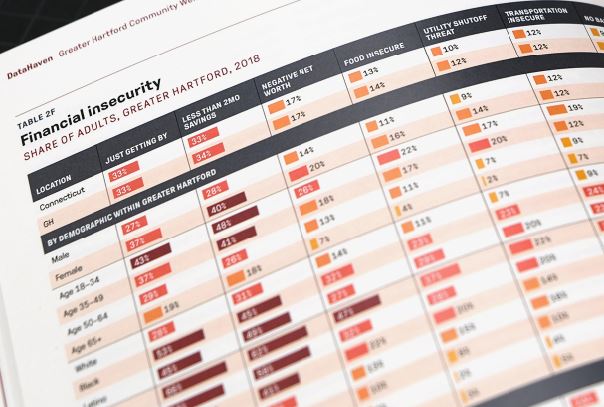
By using a scientific, random-sample approach, the DataHaven Community Wellbeing Survey (DCWS) produces reliable local data for every Connecticut city and town, along with detailed insights about adults of different backgrounds and life experiences that no other public data source provides. Drawing on interviews with more than 53,000 randomly selected adults across every ZIP code, the DCWS is believed to be the largest neighborhood-level quality-of-life survey in the United States.
The DCWS is informed by an Advisory Council of several hundred individuals representing organizations across the state, and has received financial support from over 100 public and private partners. Quantitative and qualitative data from the DCWS have been featured in hundreds of publications about all aspects of quality of life in Connecticut, including DataHaven’s Town Equity Reports and regional reports, as well as in many community health assessments and federal grant applications.
- 2027 DCWS, 2027 DCWS, 2024 DCWS, 2022 DCWS, 2021 DCWS, 2020 DCWS, 2018 DCWS, 2015 DCWS, 2012 DCWS
- Research Advisory Committee and Advisory Council
- Survey Funders
2027 DataHaven Community Wellbeing Survey (Wave 9)
Wave 9 of the DCWS is planned to take place in 2027, and will involve in-depth interviews with thousands of randomly-selected adults across Connecticut. As part of this survey wave, a limited amount of field testing may begin in 2026. Please contact DataHaven for additional information.
2025 DataHaven Community Wellbeing Survey (Wave 8)
Wave 8 of the DCWS completed in-depth interviews with 1,371 randomly-selected adults in every Connecticut town from August to October 2025. The first set of DCWS results were published on November 6, 2025, and may be found below. Unlike our larger survey waves that produce granular town- and regional-level estimates, the 2025 DCWS was mostly designed to produce detailed statewide estimates as well as data for smaller population groups within the state.
2025 Survey Results
- Press release announcing the 2025 DCWS survey results: View on our website
- Statewide Connecticut Crosstabs, containing methodology description, survey demographics, and detailed data broken down for population groups (age, sex, race/ethnicity, Puerto Rican origin, income, education, geography, disability, incarceration experience, and other categories), November 6, 2025: DataHaven2025_Connecticut_Crosstabs_110625b
- Data Placemats from our November 6, 2025 Statewide Data Release Event in Hartford, CT: Nov 2025 Data Release Placemats 110625
- Slides from our November 6, 2025 Statewide Data Release Event in Hartford, CT: DataHaven_DataReleaseEvent_110625
An Excel version of the Connecticut Crosstabs is available on request. Please contact DataHaven for more information.
2024 DataHaven Community Wellbeing Survey (Wave 7)
Wave 7 of the DCWS completed in-depth interviews with 7,458 randomly-selected adults in every Connecticut town. The first set of DCWS results were released on November 25, 2024 and may be found below. DataHaven has distributed detailed results by neighborhood, town, and region to community partners throughout the state; please contact us with inquiries.
In 2024, DataHaven also worked with local partners to field a 2024 Community-Based Assets and Needs Survey (CBANS), which was designed to collect data with specific population groups. Results from the CBANS are not directly comparable to the population-based results from the DCWS, even though many of the questions are identical.
2024 Survey Results
- Press release announcing commencement of the 2024 DCWS survey and list of funders
- Press release with results from Statewide Data Release Event: datahaven press release v1 112524
- Connecticut statewide crosstabs with methodology description, survey demographics, and data broken down for detailed population groups (age, sex, race/ethnicity, Puerto Rican origin, SOGI, incarceration experience, disability, income, education, and many others), November 25, 2024. Excel Version: dcws_connecticut_2024_EventVersion
- Crosstabs for individual cities, towns, and regions were distributed to survey partners throughout the state, and are available on request. In addition, 2024 survey data are incorporated within our Connecticut Town Data Viewer and other publications.
2022 DataHaven Community Wellbeing Survey (Wave 6)
DataHaven fielded a sixth wave of the survey in summer 2022. The 2022 DCWS interviewed 1,196 randomly-selected residents throughout Connecticut, as it was mostly designed to produce state-level estimates, unlike our larger surveys that produce town- and regional-level estimates. Results are also included in the 2023 DataHaven Community Wellbeing Index reports.
2022 Survey Results
- September 16, 2022 press release with preliminary data on food insecurity in 2022
- Data crosstab with 2022 statewide data broken down by 5CT town type, sex, age, race/ethnicity, education, income, children
2021 DataHaven Community Wellbeing Survey (Wave 5)
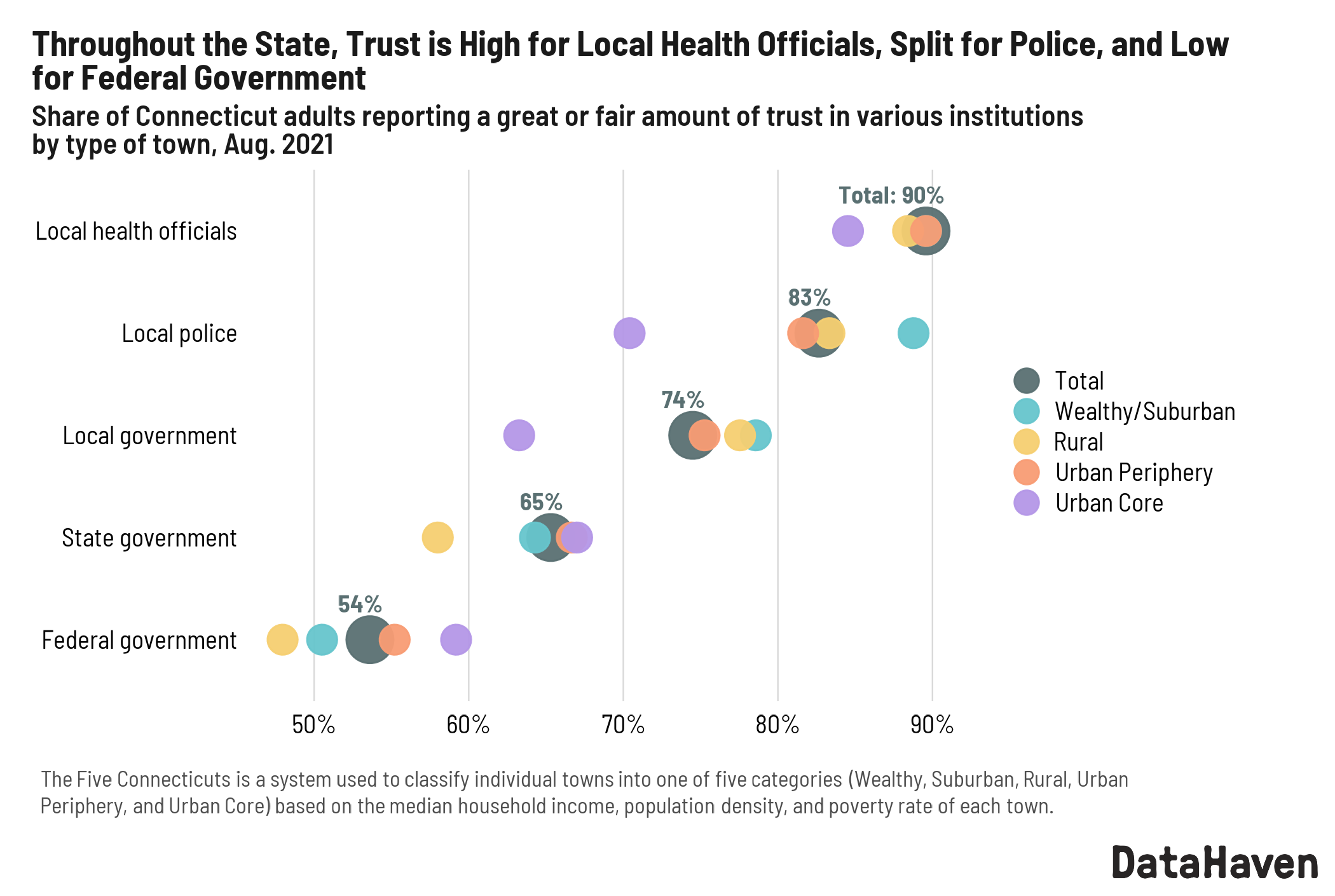
From June to December 2021, DataHaven completed Wave 5 of the DataHaven Community Wellbeing Survey with support from dozens of hospitals, charitable organizations, and public agencies throughout Connecticut. The 2021 survey involved live interviews of 9,139 randomly-selected Connecticut residents in every town. Results are also included in the Town Equity Reports, Community Wellbeing Index reports and Community Health Needs Assessment reports published throughout the state in 2022 and 2023.
2021 Survey Results
- Press release announcing commencement of 2021 Community Wellbeing Survey and list of funders
- July 2, 2021 press release on preliminary June survey results regarding vaccine equity
- October 6, 2021 press release on Summer 2021 statewide survey results – post includes detailed data crosstab with preliminary statewide data
- February 13, 2022 press release on the full set of survey results (June through December 2021), including highlighted data for Connecticut towns – post includes detailed data crosstab with final statewide data
- Additional crosstabs with town-level and regional-level data are available on request.
2020 DataHaven Community Wellbeing Survey (Wave 4)
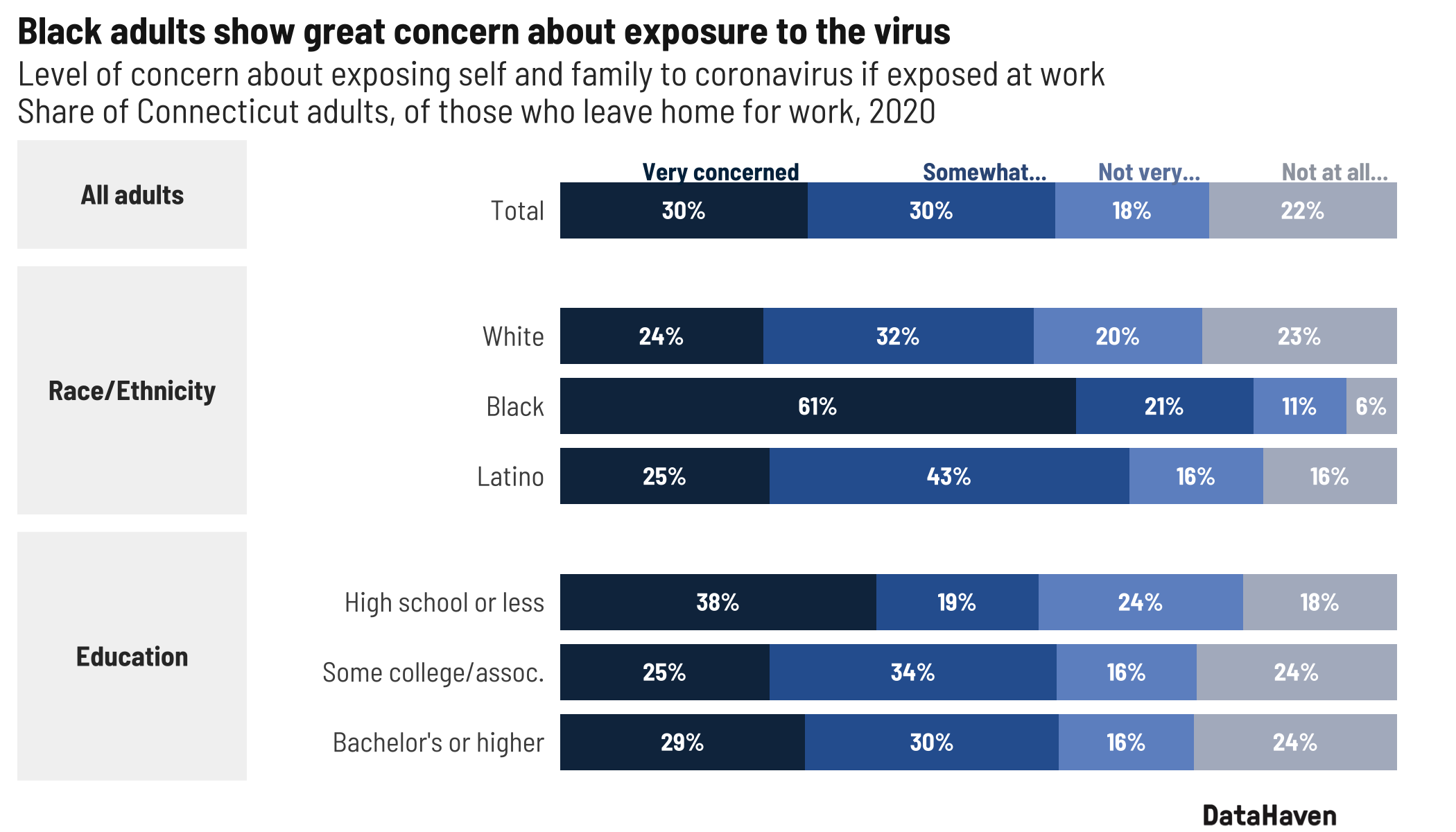
DataHaven fielded a special “COVID-19 rapid response” wave of the statewide DataHaven Community Wellbeing Survey (DCWS) by conducting live, in-depth interviews of 1,108 randomly-selected Connecticut adults from late July to mid-August 2020. Unlike larger-scale waves of the DCWS, this “rapid response” wave of the DCWS had a shorter questionnaire and was focused on estimating statewide trends by community type and demographic group, but not on measuring conditions within specific neighborhoods or small towns. Due to the smaller sample size of the 2020 DCWS wave as compared to the large-scale 2015 and 2018 DCWS waves, results should be compared to past years with caution.
2020 Survey Results
- A press release and statewide crosstabs with estimates for each survey question by gender, race, income, and other factors are now available. Click here for an electronic version of just the press release.
- A media advisory with preliminary information was posted in early September, and results from the DCWS have been used in Governor Ned Lamont’s COVID-19 press briefing. A list of press coverage, including several front-page newspaper articles, may be found here.
2018 DataHaven Community Wellbeing Survey (Wave 3)
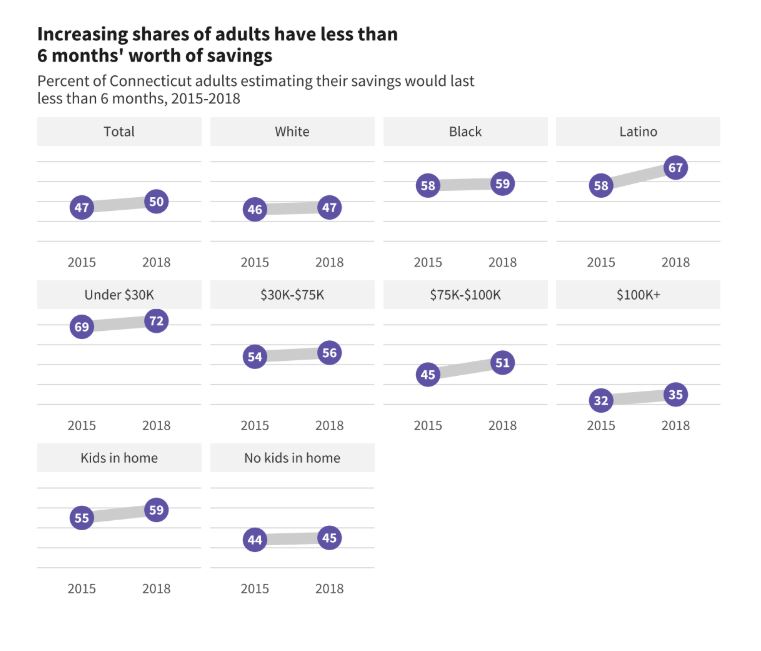
In 2018, over 16,000 randomly-selected adults in every town in Connecticut participated in live, in-depth interviews. Support for the survey was provided by more than 80 public and private partners throughout the state.
2018 Survey Results
- First published in 2021, the Town Equity Reports for all 169 towns in Connecticut include more detailed data from the survey, by town/area and race/ethnicity.
- Detailed 2019 reports published with our partners throughout Fairfield County, Greater Hartford, Greater New Haven, the Naugatuck Valley and other areas, as well as special topic reports such as one on health equity and social inequality in Connecticut, incorporate DataHaven survey results with many other national, state, and local data sources.
- Index of crosstabs for all geographic areas within Connecticut. Data for the individual towns and regions or groupings of towns other than those posted on this website may be available on request.
- Statewide crosstab of weighted estimates for Connecticut, by age, race, gender, and other factors
- Statewide crosstab of weighted estimates for the “Five Connecticuts” groupings of wealthy, suburban, rural, urban periphery, and urban core towns
- Press release announcing commencement of 2018 Community Wellbeing Survey and list of funders
- 25th Anniversary and Statewide Data Release Summary (PDF): 25th Anniversary and Statewide Data Release Summary
2015 DataHaven Community Wellbeing Survey (Wave 2)
In 2015, DataHaven expanded the Community Wellbeing Survey to encompass the entire State of Connecticut (as well as a small section of New York State), while retaining its mission to produce high-quality neighborhood-level and regional estimates for areas including Greater New Haven, Greater Bridgeport, Lower Fairfield County, Greater Hartford and New Britain, Southeastern Connecticut, the Naugatuck Valley, and other areas. The program completed in-depth interviews of nearly 17,000 randomly-selected residents in 2015.
2015 Survey Results
- Detailed 2016-2017 reports incorporating survey results and other data sources: Merging 500 Cities and Connecticut Data, Fairfield County Community Wellbeing Index, Greater New Haven Community Index, Connecticut Civic Health Index, Valley Community Index, Status of Women and Girls in Eastern Connecticut, and others
- Index of crosstabs for all geographic areas within Connecticut (NEW!)
- Statewide crosstab of weighted estimates for Connecticut, by age, race, gender, and other factors
- Statewide crosstab of weighted estimates for the “Five Connecticuts” groupings of wealthy, suburban, rural, urban periphery, and urban core towns
- Data for other geographical areas within Connecticut and New York State (posted within Data Resources section, more available upon request)
- Press release announcing completion of the 2015 DataHaven Community Wellbeing Survey
- Press release announcing commencement of 2015 Community Wellbeing Survey and list of partners
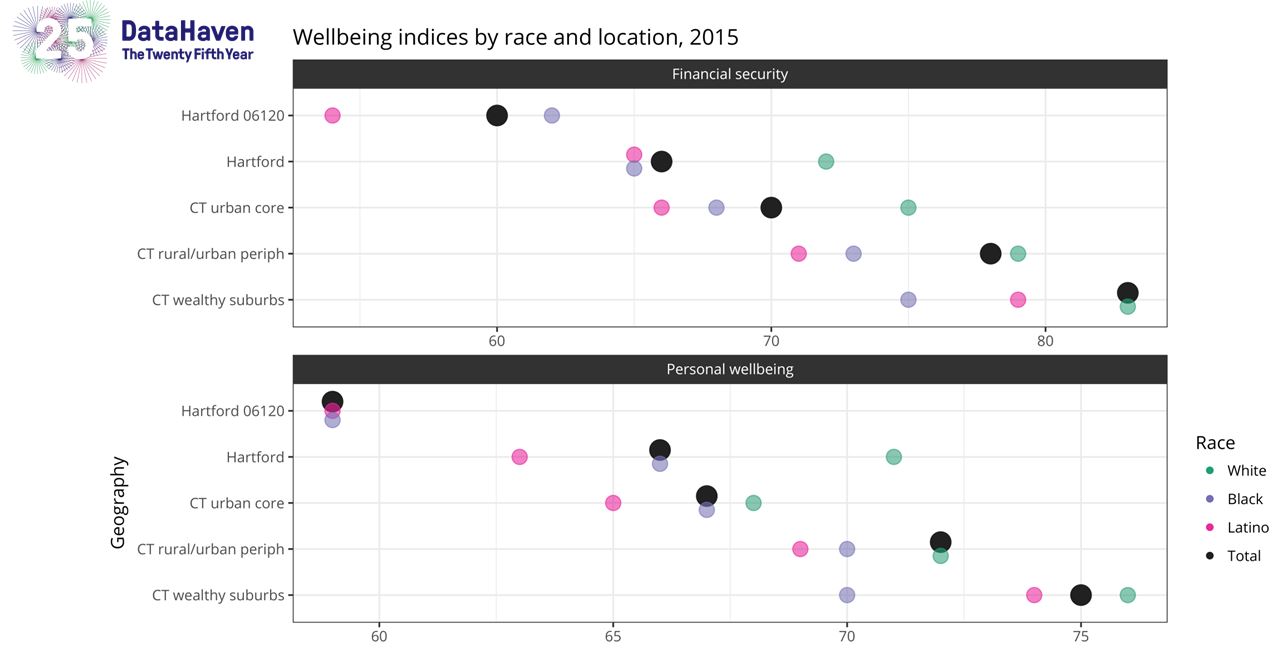
2012 DataHaven Community Wellbeing Survey (Wave 1)
The 2012 Community Wellbeing Survey asked 1,307 randomly selected adults living in New Haven and 12 surrounding towns what they thought about a variety of issues related to well-being, quality of life, and public health. Concurrently, an additional 1,300 residents in six New Haven neighborhoods were randomly selected and interviewed in person through a survey conducted by the Community Alliance for Research and Engagement.
2012 Survey Results
- Press release and executive summary of 2012 Community Wellbeing Survey results
- Greater New Haven Community Index 2013 – Detailed report based on Survey results and other data sources
- Crosstab of 2012 survey results
DataHaven Community Wellbeing Survey Research Advisory Committee and Advisory Council
The survey is developed with input from a Research Advisory Committee as well as an Advisory Council. The survey uses validated questions from national and international surveys to allow comparisons to benchmark data.
From 2018 through 2024, the Research Advisory Committee has included experts in survey research and epidemiology such as Sue Starkey, Northeast District Department of Health; Don Levy, Siena College Research Institute; Amanda Durante, Connecticut Department of Public Health; Brita Roy, Yale University; Byron Kennedy, New Haven Health Department; Mark Abraham, DataHaven; Jennifer Calder, Stamford Health Department; Lisa Morrissey, Danbury Health Department and Bridgeport Health Department; Russell Melmed, Ledge Light Health District and Chatham Health District; Amy Carroll-Scott, Drexel University; Tung Nguyen, City of Hartford; Brian Weeks, New Haven Health Department; Shayna Cunningham, University of Connecticut; Kathleen Duffany, Yale University; Emily Wang, Yale University; Victor G Villagra, University of Connecticut; Gregg Gonsalves, Yale University; Danya Keene, Yale University; Jane Ungemack, University of Connecticut.
Advisory Council members include representatives from approximately 300 different public agencies and private organizations throughout the state, representing a wide range of interests. Anyone may join the Advisory Council. Please sign up for our e-newsletter (at the bottom of this page) to receive invitations to the next round of Council meetings.
DataHaven Community Wellbeing Survey Funders
Please see our list of sponsors and partners. Please contact us to learn more.
Related Reports


Related Data
Document
The Health and Wellbeing of Formerly Incarcerated People in Connecticut: Insights from the DataHaven Community Wellbeing Survey (PDF)
Document
Disability in Connecticut: Insights from the DataHaven Community Wellbeing Survey (PDF)
Data Resource
2025 Middlesex Health Community Health Needs Assessment
Map
Map
Neighborhood Distrust by ZIP Code DataHaven Community Wellbeing Survey MRP Estimates 2022 7-year average
Document
Fairfield County Equity Report 2023
Document